
You don’t squeeze pilgrims
In May 1184 a fire tore through Glastonbury Abbey. It took most of the church and cloisters, along with the books and relics that brought pilgrims, and their money, to the place. A few years later the monks had a remarkable stroke of luck. Digging in their own cemetery, they found the grave of King Arthur and Queen Guinevere.
Historians have been raising an eyebrow ever since. The University of Reading’s work on the abbey notes that the discovery “provided a very welcome potential source of income”, and that the monks may have staged it “to attract royal patrons and pilgrims and their money to Glastonbury”. When archaeologists went back through excavation records, they reported that the monks had rebuilt the church with “antiquated and retrospective elements, apparently to deliberately feign antiquity”.
I spent years working in heritage, and what always struck me about pilgrimage is that although the monks thought they were important, the relics were almost beside the point. People probably didn’t walk to Somerset to inspect a set of bones, they went so they could say they’d been.
Which brings me to Sunday morning when tickets for Glastonbury 2027 (located a few miles from the Abbey) went on sale. They cost £408 and sold out in 42 minutes even though not a single act has been announced. Buyers accepted a high price, at a time when most households are watching every pound, and they accepted a product they can’t see yet.
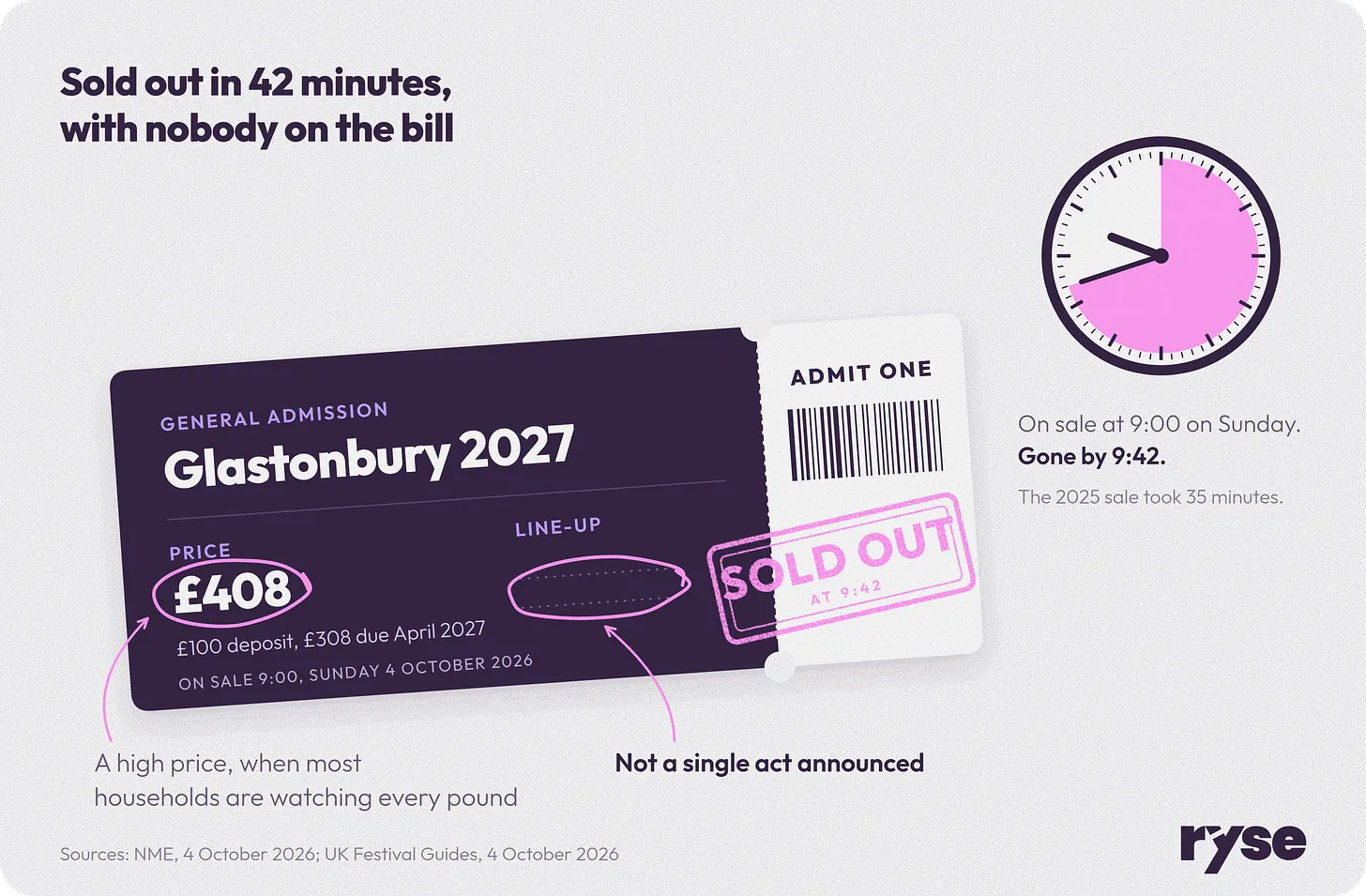
It’s tempting to label that “brand power” but I think there’s something else in it. Glastonbury isn’t selling a lineup, it’s selling a pilgrimage. The lineup is the relic, it’s nice to have but often not the reason someone goes.
The rest of the festival market shows what happens when you sell the lineup instead. The Association of Independent Festivals counted a record 78 UK festivals cancelled, postponed or taking a fallow year in 2024, and another 43 in 2025. A festival selling mainly on who’s playing has to build demand fresh every year, but a festival that sells the pilgrimage owns its demand.
Pilgrimage demand comes with the obvious temptation to price it extremely high. When Oasis reunion tickets went on sale in August 2024 demand was as fierce as Glastonbury’s. Some fans watched prices climb while they sat in the queue, the authorities investigated, and Ticketmaster got into trouble. Glastonbury could clearly charge more than £408 but it doesn’t. You don’t squeeze pilgrims.
Every business has some pilgrims among its customers. They come for the habit and the feeling of belonging, and they’d turn up even if you announced nothing new. Apple has plenty. In 2016 Jimmy Kimmel’s team stopped people in the street, offered them the chance to try a new iPhone and quietly handed back their own phones, cleaned and in a new case. People loved them. One said the screen looked “a lot more crisp”, and a few paid $50 in cash to keep it.
Every business also has lineup buyers, who shop and then leave when something else looks better. The two behave differently on price, on how often they come back and on how long they stay, but most companies can’t tell you the split.
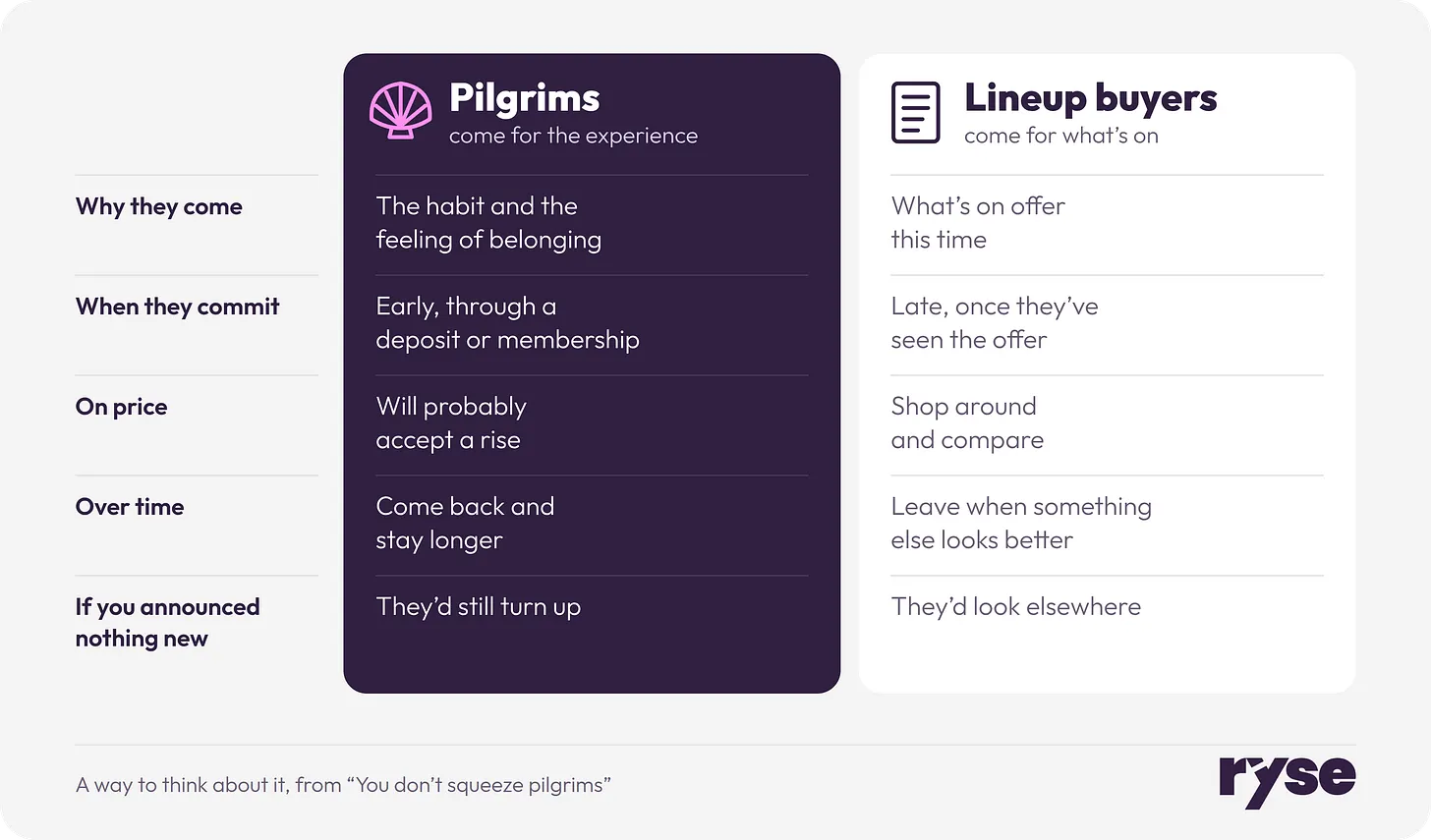
The first job of anyone truly wanting to understand a business is finding this out. Segmenting customers by why they buy, not only what they buy, shows how much of your revenue is pilgrimage and how much is lineup. That changes where the marketing spend should go, since money spent on the lineup to keep pilgrims happy often buys demand that would have arrived anyway.
The second job is understanding pricing and go-to-market. Pilgrims will commit early, through a deposit, membership or a registration, which gives you cash and an early read on demand. They will also probably accept a price rise, and knowing where that price point sits is worth modelling.
The third job is measurement. “Sold out” is a poor KPI because it tells you nothing about the people who didn’t get in, or whether they’ll try again next time. Glastonbury’s registration list is the data that actually tracks pilgrimage.
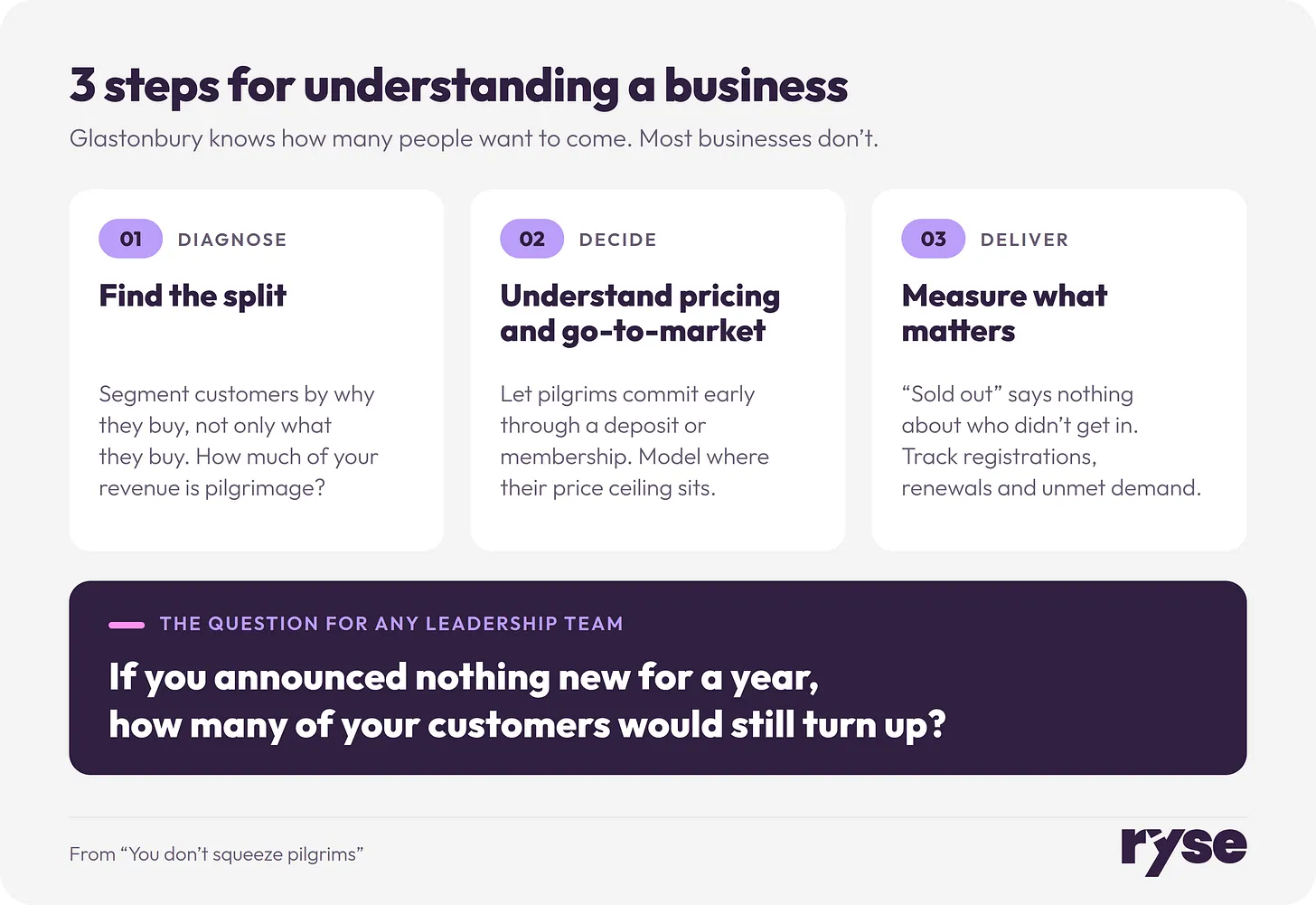
So here’s the question I’d put to any leadership team. If you announced nothing new for a year, how many of your customers would still turn up? If you don’t know, that’s the place to start.
As an aside, the first Glastonbury festival, in September 1970, drew 1,500 people. Tickets cost £1, “including free milk from the farm”. The milk, sadly, is no longer included.